How a course creator doubled enrollments with a Wall of Love
Picture a course creator three weeks before relaunch: a solid course, happy students, and a sales page that converts fine for referrals and badly for everyone else. Here's how a typical Wall of Love setup plays out — what gets collected, where it goes, and what "doubled" actually looks like up close.
A quick note before we start: this is an illustrative scenario, not a case study of a real named person. We've stitched it together from the pattern we see most often with course creators, so you can copy the moves rather than the name.
The setup: a good course and a quiet sales page
Our creator runs a cohort-based course. Students who join through a friend's recommendation almost always buy. Strangers who arrive from social posts or search read the page, scroll to pricing, and leave.
Earlier in the year they tried the obvious fix: a full redesign. New hero image, tighter copy, cleaner layout. The page looked much better — and converted about the same.
The diagnosis is simple once you see it. Referrals convert because a real person vouched for the course. Cold visitors have no one vouching for anything. The page didn't have a design problem; it had a proof problem.
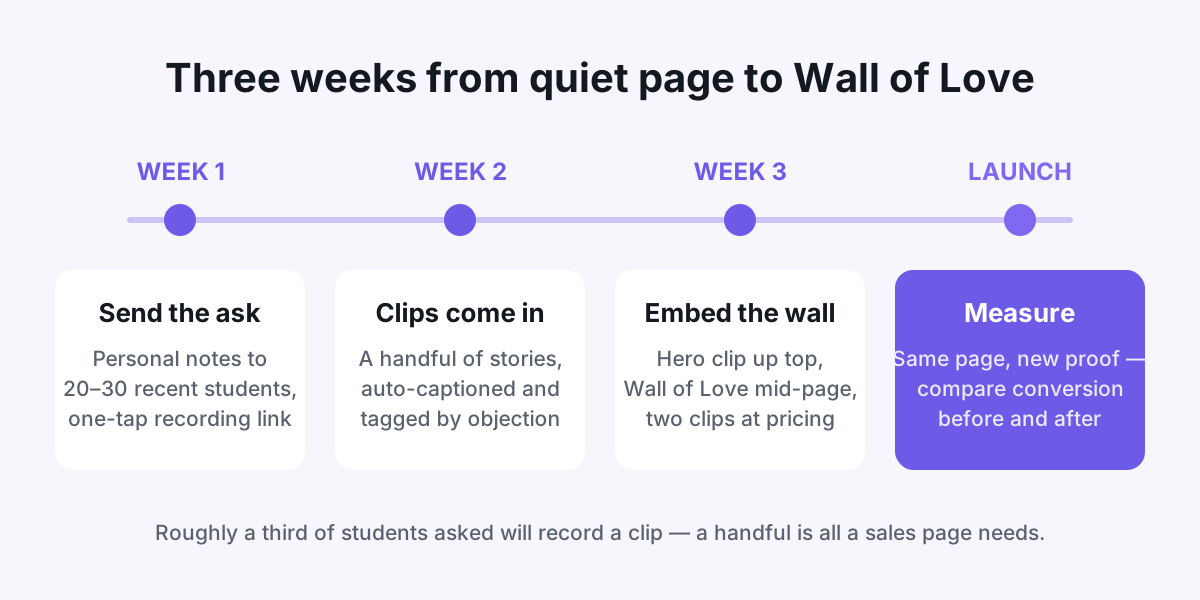
Week 1: ask twenty students, expect a handful of clips
Instead of writing more copy, the creator messages twenty to thirty recent students — the ones who finished, posted their work, or said something kind in the community. Each gets a personal note and a one-tap Wovestory recording link. No account, no app, no scheduling.
The ask is short and specific. Something like:
- "You mentioned the course helped you land your first client — would you tell that story on camera? It takes about two minutes: [link]"
- Three prompts inside the link: What almost stopped you from enrolling? What can you do now that you couldn't before? Who would you recommend this to?
Those three questions matter more than the tech. The first one gets students voicing the exact objections a cold visitor has. We break down the timing and wording in detail in our guide on how to ask for a video testimonial and actually get one.
Out of twenty-something asks, expect roughly a third to record something within a week or two. That's not a failure rate — a handful of genuine clips is all a sales page needs.
Week 2: keep the specific clips, cut the flattering ones
The clips come back uneven, and that's fine. The creator's job now is editorial, not technical.
The rule of thumb: keep clips with a before and an after. "I went from staring at a blank page to publishing weekly" sells. "The course was amazing, highly recommend!" doesn't — a stranger can't picture themselves in it.
Two small chores make Week 3 painless:
- Captions on everything. Most visitors watch muted, so every clip gets auto-captions with a quick proofread of names and product terms.
- Tag by objection. Each clip gets a label like "price," "no time," or "too beginner." When a spot on the page needs to answer a specific doubt, the right clip is one search away — the same system we describe in tagging and sorting a testimonial library so the right quote surfaces in seconds.
Week 3: one clip up top, a wall in the middle, two by pricing
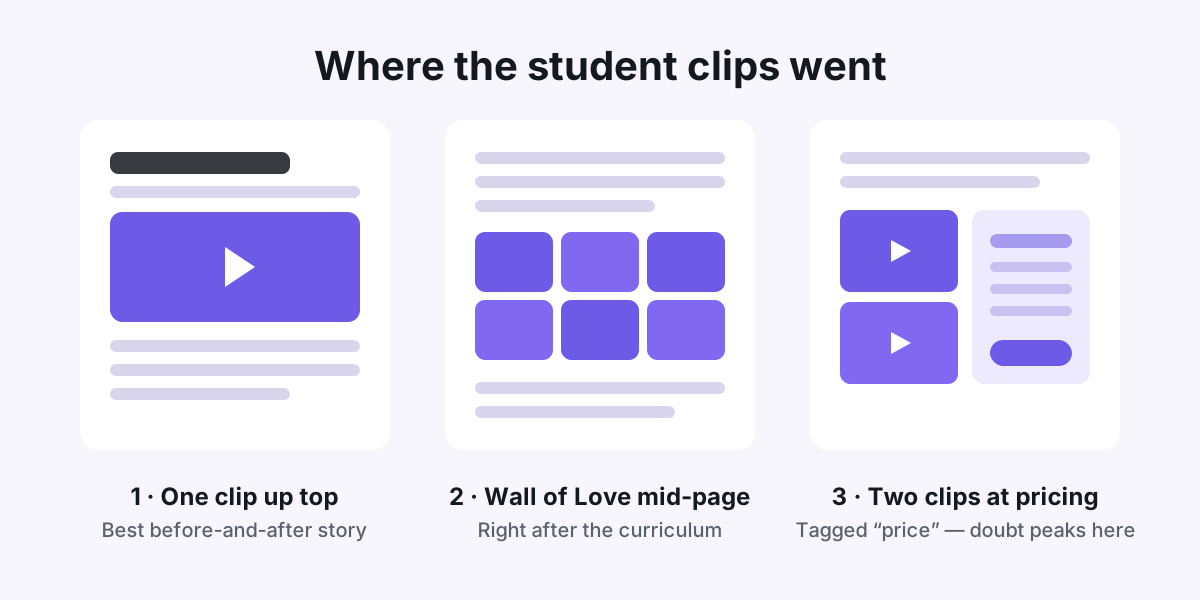
The creator resists the urge to sprinkle videos everywhere. Three placements, each with a job:
- One clip near the top. The single strongest before-and-after story, right under the headline. It proves within seconds that real students exist.
- A Wall of Love after the curriculum. Once a visitor has seen what the course covers, a grid of short student clips answers the question "did this work for people like me?" in a dozen different voices.
- Two clips beside pricing. Both tagged "price" — students saying, in their own words, that the course paid for itself. That's the exact moment doubt peaks.
Each spot is a copy-paste embed, so the whole page update takes an afternoon. If you want the reasoning behind each spot (and how to test alternatives), we wrote a full guide on where to embed testimonials on a course sales page.
What "doubled enrollments" really means
Here's the honest version, because "doubled" sounds more dramatic than it is. In a scenario like this one, the page might convert around one visitor in a hundred before the change, and around two in a hundred after. Same traffic, twice the enrollments — from a shift most visitors would never consciously notice.
We can't promise you that curve. Results depend on your traffic, your price, and how specific your students' stories are. What we can say is that creators adding real student video to a page that previously had no proof tend to see the clearest lifts of any single change — much clearer than another round of copy edits.
To know whether it worked for you, measure three things: sales page conversion for a few weeks before and after, how many visitors play at least one clip, and whether people who reach pricing actually enroll. If the clips are being watched and pricing-page hesitation drops, the wall is doing its job.
Run this play before your next launch
The whole scenario compresses into a checklist you can start today:
- List 20–30 students with a real result. Message them personally with a recording link and three questions.
- Keep only clips with a before and an after. Caption everything; tag by objection.
- Embed exactly three placements: hero clip, mid-page wall, two clips at pricing.
- Note your current conversion rate first, so "it worked" is a number, not a feeling.
If you want to see how the collect-to-embed pipeline fits together before you commit, the how it works walkthrough covers it in about two minutes of scrolling.
Put your customers on camera
Collect, caption, and embed video testimonials with Wovestory — see it on your own testimonials in a 20-minute call.