Do you need permission to use a video testimonial?
Short answer: yes. A customer who films a glowing clip hasn't automatically agreed to see their face on your sales page or in an ad. Here's how to get clear permission the friendly way — without a scary legal form killing the moment.
Why "they sent it, so it's fine" isn't enough
When someone records a testimonial for you, they're doing you a favour. They're picturing a specific use — maybe a spot on your website, maybe a mention in your newsletter. What they may not be picturing is that same clip running as a paid ad six months later, or their name and face on a billboard-sized banner above your pricing.
Permission closes that gap. It turns a vague "sure, use it" into a shared understanding of exactly what happens next. That protects your customer — their face and voice are personal to them — and it protects you, because a testimonial you have clear permission for is one nobody can ask you to awkwardly pull down mid-launch.
There's a trust angle too. Regulators like the US Federal Trade Commission expect testimonials to reflect the honest, genuine experience of a real person. Getting explicit permission is part of keeping your social proof honest — which is the whole reason it works.
One quick note before we go further: this is practical guidance, not legal advice. If you're running paid ads, working in a regulated field like health or finance, or collecting testimonials outside your own country, it's worth a quick check with a professional who knows your local rules.
What clear permission actually covers
You don't need a five-page contract. You need a short, readable "yes" that answers five questions. If your customer can read it in fifteen seconds and still understand what they agreed to, you're in good shape.
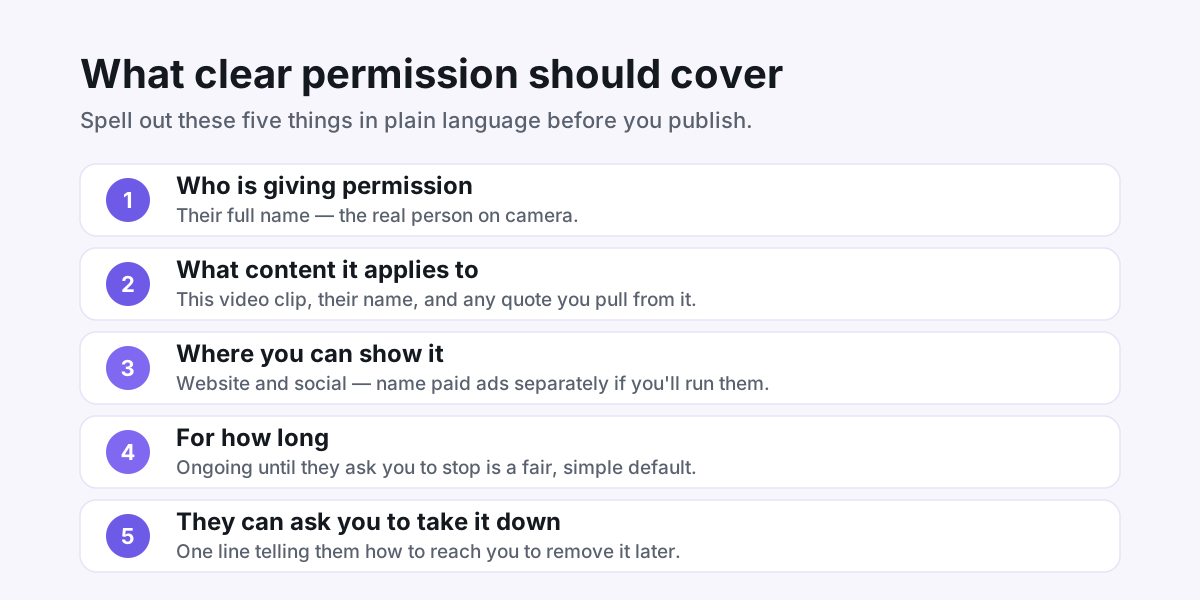
- Who is giving permission. The real person's full name — the one actually on camera.
- What it applies to. This video clip, their first name and last name, and any short quote you pull from what they said.
- Where you can show it. Your website and social channels are the common default. If you might run it as a paid ad, say so separately — "website use" doesn't automatically include ads.
- For how long. "Ongoing, until you ask us to stop" is a fair and simple default that saves you from re-asking every year.
- How to change their mind. One line telling them how to reach you if they ever want it taken down.
Wording you can copy today
The best permission ask sounds like you, not like a lawyer. Here's a plain-English version you can paste into a form checkbox or an email reply and adjust:
"I'm happy for [Your Business] to share this video, along with my name, on their website, social media, and marketing. I understand I can ask them to take it down at any time by emailing [your address]."
If you know you'll want to run ads, add one clause: "…including in paid advertising." Keep it in one breath. The moment permission reads like fine print, people hesitate — and a hesitant yes is worse than a clear one.
Timing matters as much as wording. The easiest permission to get is the one you ask for in the same breath as the request itself. If you want a refresher on that first ask, our guide on how to ask for a video testimonial and actually get one pairs neatly with this — get the ask and the permission working as a single, painless step.
Ask for it at the moment of recording
The most common permission mistake is treating it as a separate errand: collect the clip now, chase a signed form later. That second step is where testimonials go to die. People get busy, the reply never comes, and a great clip sits unused because you're not sure you're allowed to post it.
Fix it by folding permission into the recording itself. When a customer opens a one-tap recording link, a simple consent checkbox can sit right on the same page — they tick it, they record, and the "yes" is captured at the same moment as the video. No forms to send, no signatures to hunt down.
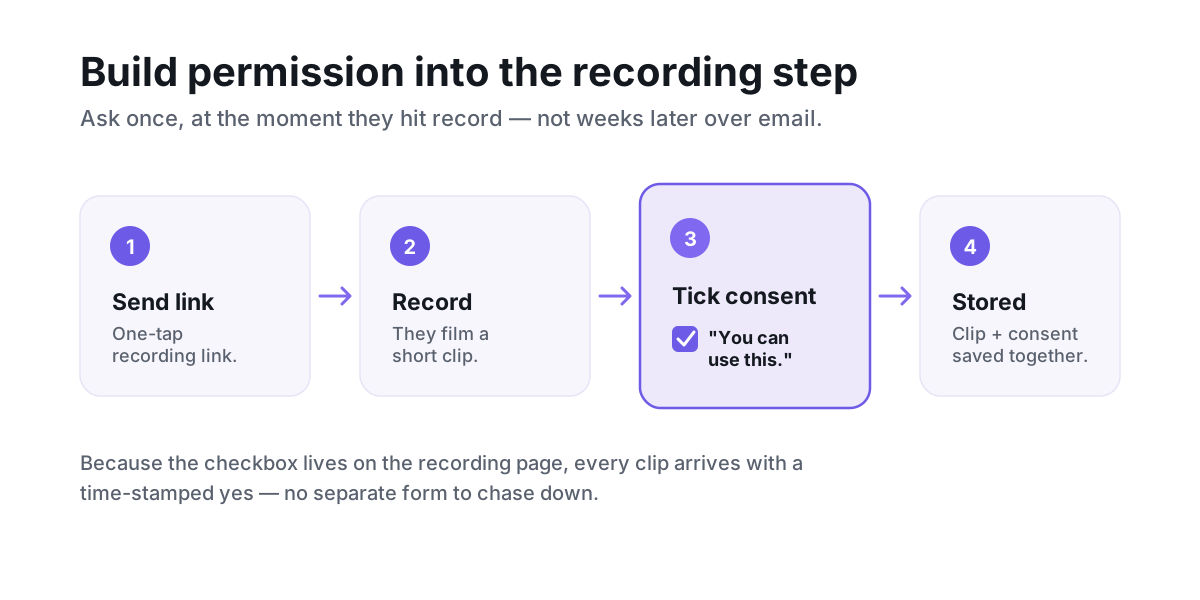
This is how the collection flow works in Wovestory: the recording link and the permission live in the same place, so consent isn't a follow-up — it's built in. That also means when you later go looking for a clip to publish, you already know it's cleared.
Keep a record, and honour "take it down"
Permission is only useful if you can find it again. Store each "yes" next to the clip it belongs to, with the person's name and the date. If a customer ever asks whether they agreed, or you're double-checking before a big campaign, the answer should take seconds — not a scroll through old emails.
Keeping consent attached to the clip also makes your library easier to work with in general. When every testimonial carries its own status, pulling the right cleared quote for a landing page becomes a quick search rather than a guessing game — the same habit that makes it easy to tag, sort, and find the perfect quote in seconds.
Finally, mean it when you say they can change their mind. If someone asks you to remove their testimonial, do it promptly and without friction. It almost never happens — but the fact that you'll honour it is exactly what makes people comfortable saying yes in the first place. If you're gathering short written praise too, the same respect-first approach in turning reader replies into social proof applies: ask plainly, keep the record, and let people opt out.
The one-minute version
Yes, you need permission. Make it a single, friendly "yes" that covers who, what, where, how long, and how to change their mind. Ask for it at the moment of recording so it never becomes a chase. Store it next to the clip. Then publish with a clear conscience — and a testimonial nobody can pull out from under you.
Put your customers on camera
Collect, caption, and embed video testimonials with Wovestory — see it on your own testimonials in a 20-minute call.