How to get course testimonials when you have zero students
You don't need paying students to collect real testimonials. Run a small beta cohort, trade free access for honest feedback, and you can have launch-ready quotes before your cart ever opens. Here's the whole play, step by step.
Break the chicken-and-egg loop
Every first course launch hits the same wall. Buyers want proof the course works. Proof comes from students. Students come from buyers. Round and round.
Most new creators either launch with a bare sales page and hope, or pad it with vague praise from friends who never took the course — and buyers can usually smell the difference.
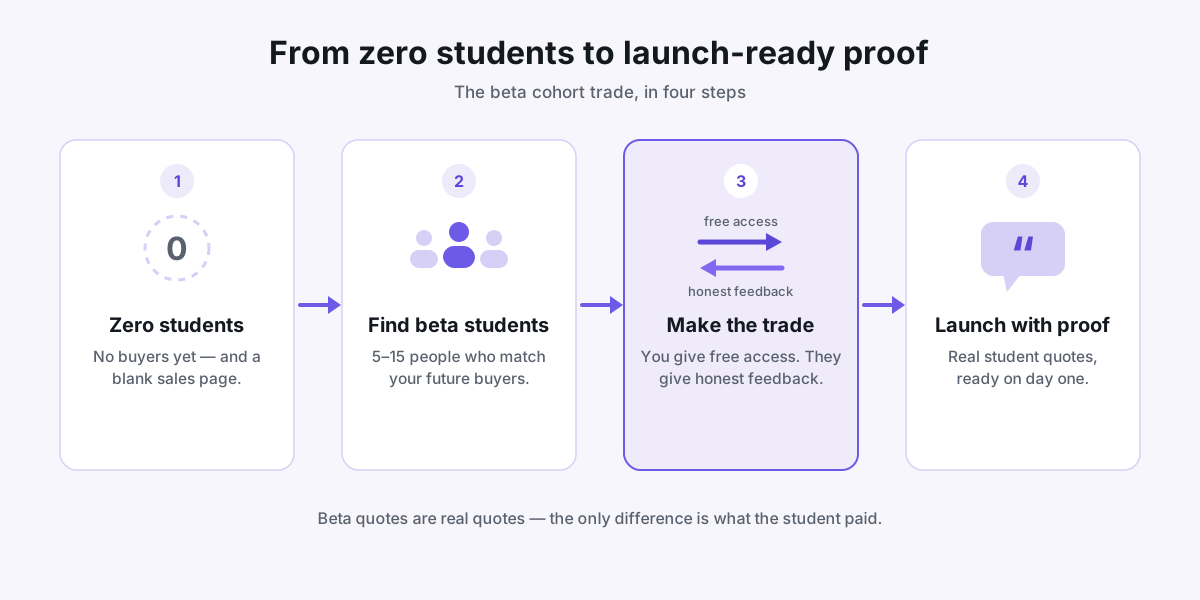
There's a third option: create real students before you charge anyone. That's all a beta cohort is. A small group takes the full course for free, before launch, in exchange for honest feedback and — if they feel it deserves one — a testimonial.
Quotes collected this way aren't a workaround or a lesser substitute. Beta students take the course, do the work, and get results. The only thing separating them from a paying student is the price tag, and a testimonial has never required a receipt. What it does require is honesty: never invent a quote, never dress up a friend's favor as a student result, and never make praise the price of a free seat.
Find five to fifteen beta students
Keep the group small on purpose. Five to fifteen people gives you patterns in the feedback and more quotes than your sales page needs, while staying small enough that you can support everyone personally.
Look where your audience already knows you:
- Your email list, even a tiny one. Twenty subscribers who chose to hear from you beat a thousand strangers.
- People who reply to your posts. Anyone engaging with your free material is already halfway convinced.
- Communities you're genuinely part of. A Slack group, a subreddit, a forum — invite people privately and respect each community's self-promotion rules.
- Your waitlist, if you have one. Beta seats are a perfect reward for early interest.
One filter matters more than any source: every beta student should be someone who could plausibly buy the course later. A supportive cousin with no interest in freelancing can't give useful feedback on your freelancing course, and buyers can tell when a quote comes from outside the audience.
Here's an invitation you can adapt:
"I'm opening [course name] to ten beta students before launch. You get the full course free. In return, I'll ask you to finish it within four weeks, tell me honestly what's confusing or missing, and — only if you feel it earned one — leave a short testimonial I can use on the launch page. Want in?"
That little phrase "only if you feel it earned one" is doing real work. It keeps the trade fair, keeps the quotes genuine, and signals that you want the truth more than the compliment.
Run the beta like a dress rehearsal
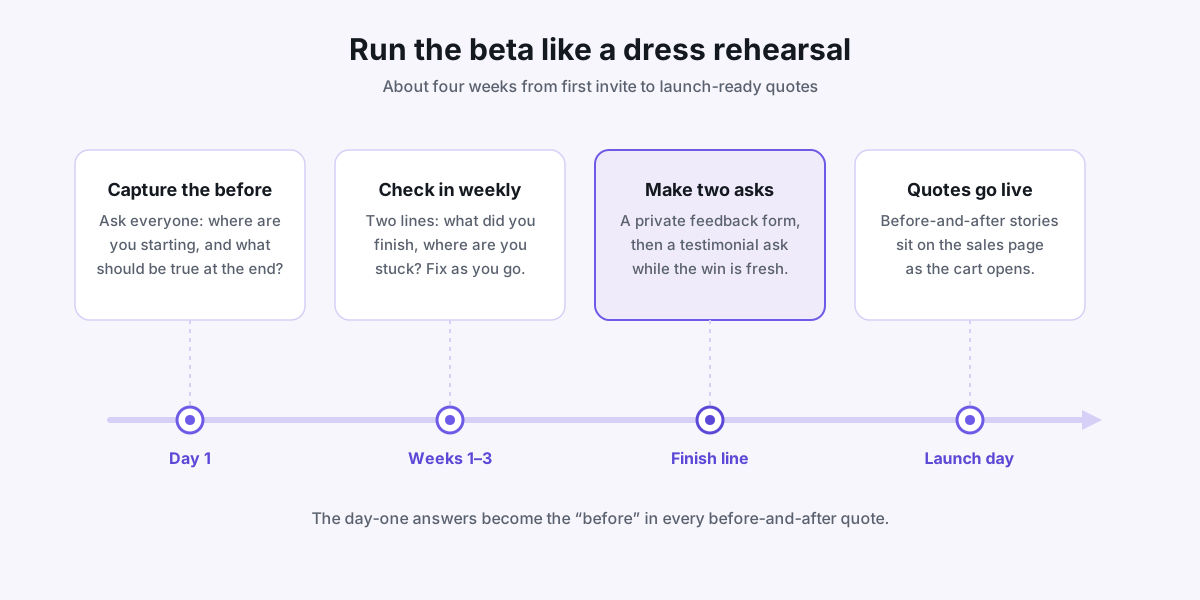
Free students tend to drift unless the beta has structure — and a student who never finishes has no result to talk about. Four habits keep the cohort moving:
- Set a start date and a finish line. Four to six weeks suits most courses, and a group moving together keeps momentum up.
- Capture the before-state on day one. Ask each person: "Where are you with [topic] right now, and what do you want to be true when you finish?" Save every answer.
- Check in weekly. Two lines is plenty: what did you finish, where did you get stuck? Fix confusing lessons as reports come in — that's the feedback half of the trade paying off before launch.
- Write down wins as they happen. When someone posts "I just booked my first client," that's a future testimonial announcing itself.
The day-one question is the quiet hero here. When someone finishes, you can set their week-one words next to where they ended up — and that before-and-after gap is what makes a testimonial concrete instead of polite.
Ask at the finish line, not after launch
The best moment to ask is right when each person finishes, while the result is still fresh. Wait until launch week and both the memory and the enthusiasm will have faded.
Make two separate asks. First, a private feedback form: what nearly made you quit, what was missing, what should be fixed before anyone pays for this? That one is for you alone — people are more candid when they know the answer isn't going on a poster. Then, for students who clearly got value, the public ask:
"In week one you said you wanted [their goal] — and you got there. Would you record a two-minute video about where you started, what changed, and what you'd tell someone considering the course? I'd feature it on the launch page with your name."
Point people back to their own baseline answer and ask for specifics. "I booked three discovery calls in week four" will always outsell "great course." Video is worth requesting because course buyers are a skeptical bunch, and a face on camera is harder to dismiss than text on a page — our guide on how to ask for a video testimonial covers the timing and wording in more depth, and if you're weighing formats, see when video beats written testimonials. A written quote from a camera-shy student is still far better than nothing.
Whatever the format, get clear permission to use each testimonial — name, face, and where it will appear — before launch day, not after.
Turn the beta into a launch-ready page
With quotes in hand, four finishing moves get you to launch:
- Fix before you sell. Ship the improvements the feedback surfaced before the cart opens. Beta students caught those problems for free so paying students never meet them.
- Trim, don't rewrite. Cut a rambling opening, but never change someone's words. If a quote needs editing for length, show them the edit and get a yes.
- Keep the word "beta" if it comes up. A student saying "I joined the beta group" reads as exactly what it is: honest. You never claimed they paid — just never imply they did.
- Put each quote where the doubt lives. A results story near the headline, relatable students near the curriculum, value-for-money quotes beside the price. Our guide to where to embed testimonials on a course sales page maps this out placement by placement.
By launch day, the loop is broken. A dozen or so real people finished the course, their notes made it better, and your cart opens next to their words instead of a blank page. And once paying students start finishing, run the exact same play — baseline question, weekly check-ins, an ask at the finish line. The beta was just the first rehearsal of a system you'll reuse for every launch.
Put your customers on camera
Collect, caption, and embed video testimonials with Wovestory — see it on your own testimonials in a 20-minute call.