How to choose between video and written testimonials
Video costs more than a written quote — more asking, more chasing, more editing. So the useful question isn't which format is better. It's when that extra effort pays for itself, and when a single sentence of text does the same job for free.
What each format is genuinely good at
Video carries things text can't. A face, a voice, the pause before someone answers, the oddly specific detail they add without being prompted. It's hard to fake and hard to ghostwrite, which is exactly why it settles a nervous buyer.
Text is good at something completely different: being everywhere, cheaply. A written quote fits under a headline, inside a pricing table, in a welcome email, on a slide, in a search result. It asks nothing of the reader — no play button, no sound, no waiting. Most visitors skim, and text is the only format a skimmer actually takes in.
Text also tends to be sitting in your inbox already. If people reply to your emails with kind words, you have a supply of proof you haven't published yet — here's how to turn reader replies into social proof without asking anyone to record anything.
Ignore the format statistics, including the flattering ones
Search this question and you'll meet a lot of confident percentages: how much better video converts, how much more of a video message people supposedly remember. Follow the citations and they usually end at a company that sells video, or at a blog post quoting another blog post. There's rarely a study, a sample size, or a method underneath.
We make video testimonial software, so treat this as a rule we're willing to apply to ourselves: don't choose a format because of a number you can't trace. Choose it based on what you're selling and who's deciding.
The rule: match the proof to what the decision costs
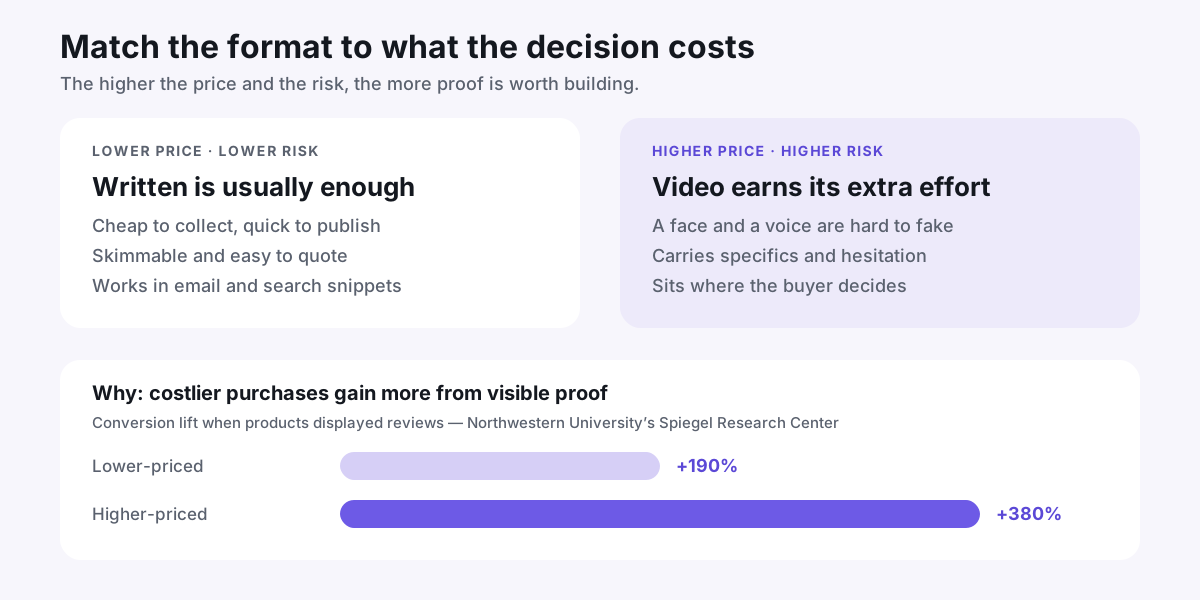
There is real research on how proof affects buying. Northwestern University's Spiegel Research Center analyzed reviews across three online retailers and found that purchase likelihood was 270% greater for a product with five reviews than for one with none. Two details in that work matter more than the headline number.
First, the effect depended on price. Displaying reviews lifted conversion by about 190% for lower-priced products and about 380% for higher-priced ones. The more a decision costs, the harder the buyer leans on other people's experience.
Second, the returns fade fast. Most of the benefit arrived within the first five reviews; more kept helping, but far less per review.
Put those together and you get a rule you can actually use:
- Low price, low risk, easy to undo → written quotes are enough. Collect several, keep them specific, move on.
- High price, high risk, hard to undo → video is worth the extra effort, because that's where proof is doing the most work.
Risk isn't only money. Ask three questions about your offer: what does it cost, how easily can someone back out, and how much are they trusting a person rather than a product? A small ebook with a refund button scores low on all three — text is fine. A six-month coaching program, a wedding photographer, a service where someone hands over work that matters: high on all three. That's where a face and a voice earn their keep.
Where each format belongs on the page
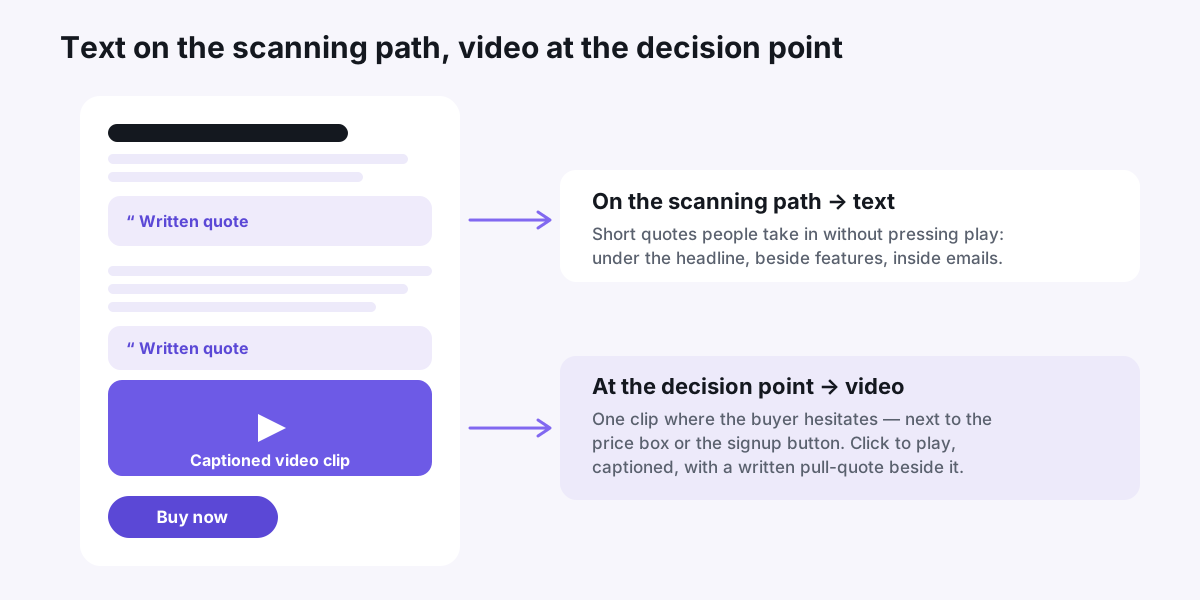
Format and placement are really one decision. Text belongs on the scanning path — the route a distracted visitor's eyes take on the way down the page. Video belongs at the decision point: next to the price, beside the signup button, on the checkout page. That's the moment worth a stranger's ninety seconds.
A clip buried at the bottom of a long page isn't proof, it's a file. Our guide to where to embed testimonials on a sales page maps the specific spots, but the short version is: one clip where the hesitation happens, quotes everywhere else.
Think about where your proof travels, too. Email is a text medium — clips get blocked, buried, or turned into a sad grey box. Search results show text. Social feeds autoplay on mute. Pick the format the destination actually supports.
The honest answer is usually both, doing different jobs
Not both everywhere — both in different places. A page that works normally has a handful of short written quotes spread along the scanning path and two or three videos at the moments that matter. The quotes catch the skimmers. The videos convince the people who slowed down.
If you're building a dedicated wall of proof, mixing formats also makes it look real: a grid of nothing but video reads as produced, and a grid of nothing but text reads as thin. Here's how to think about designing a testimonial wall that matches your brand.
And keep the diminishing returns in mind. Five strong pieces of proof do most of the work. Chasing your fortieth clip is usually worth less than moving the five you already have to better spots.
Two rules before you publish either format
Caption every video. Most people watch on mute — on a train, in an office, next to a sleeping baby. An uncaptioned clip is a silent picture of a stranger. Captions also make the clip usable for people who are deaf or hard of hearing, and they let a skimmer get the point in two seconds without pressing anything.
Give every video a written pull-quote. One sentence from the clip, printed beside it. It serves the majority who won't press play, it survives in email and search, and it tells everyone else whether the video is worth their time. This is also the cheapest way to get both formats out of one recording.
Permission applies to both, by the way. A line from a private email isn't automatically yours to publish, and the same consent habits that cover video cover text — our guide to getting permission to use a testimonial has wording you can copy.
One line to take away: let price and risk pick the format, let the page pick the placement, and don't let anyone's untraceable statistic pick either.
Put your customers on camera
Collect, caption, and embed video testimonials with Wovestory — see it on your own testimonials in a 20-minute call.